

Chapter 21 - The Cost
Dishwashers, Verandahs, Showers, Silence

While I was busy trying to be a better mum, I was losing my eldest son. That’s this chapter. I’d give almost anything not to have to write it.
Jeremy was eighteen that year, six months out of school, working a couple of shifts at Subway and not finding more, though he said he was looking. Our family had a philosophy we’d repeated so often the kids could recite it: everyone pitches in. You’re working, you’re studying, or you’re contributing at home, but you’re not doing nothing. Every family runs on a rule like that, and most of us never look at ours long enough to notice what it actually measures. Ours measured output. It had nothing at all to say about a boy who had gone dark on the inside.
And Jeremy, that year, was doing something dangerously close to nothing. He’d started TAFE and quit within weeks, and we didn’t know then that his girlfriend’s jealousy of the other girls in his class had made turning up cost more than it was worth. She was still on the scene, needy and clinging and fond of a crisis, and he clung right back, the two of them wrapped around each other in that consuming first-love way that makes a boy unreachable. His room was getting worse by the week, mess in layers, clothes gone stiff on the floor, rotten food in the little bar fridge he kept in there, the kind of thing that tests any parent alive, and I won’t pretend it didn’t test us.
And he was changing, in ways that were there to be seen. This was a boy who used to walk in the door and fill the house. Quirky and funny, quick, the one who could get all three kids laughing at the dinner table until Caleb had to tell them to settle down, and he had no patience at all for gossip or whining, he’d cut across it with a joke and move everyone on. That year he went dim. He escaped into video games until all hours, the light still on under his door at two in the morning. He turned pessimistic, melancholy in a way I had never once seen in him, and he let the friends he’d loved since primary school go unanswered, then found reasons for it. They annoyed him now. They were idiots. They sucked. He started having panic attacks. And we had an explanation ready for every piece of it, because we were his parents and explaining is what parents do. The games were sucking the life out of him. His girlfriend was too controlling. He was unmotivated. Every one of those changes was something happening to him, and we read the lot of it as something he was choosing.
And what we could not see, what I won’t detail here because it is his story and not mine, is that inside his relationship and his girlfriend’s house were things happening to him that no young person should have to carry, and he was carrying them alone, behind a closed door, in a home where both his parents were too taken up with their own hidden life to notice a boy going under at the end of the hallway.
Jeremy was hard to parent that year. That much is true, and it isn’t the whole of it, because there was a hole where his relationship with his father should have been and it had been there a long time. Caleb never took him under his wing, never found a way in. They were made of different materials. Caleb was adventure and sport and timber, things you could climb or throw or build, and Jeremy was music and art and theatre and film, which is to say Jeremy was cut from my cloth, while Sam, our middle one, was the sporty boy Caleb knew how to read, and Stella was his little princess and had been from the day she was born, a role that asked nothing of anyone except adoration. Caleb loved Jeremy. There was never any doubt of that. But he’d never learned the boy’s language, and where the understanding should have been there was mostly irritation. He was on at him constantly, a low steady drip of it, sighing at him, embarrassed by him, and he let it show, the eye-rolls, the little jokes at Jeremy’s expense in front of other people. If Caleb had one deep-wired trigger it was laziness, and Jeremy, drifting and dreamy and slow to move, read to him as lazy. He’d always thought the boy was too soft. He wanted him to harden up, toughen up, be a man, work the way he worked. So the anger built and the closeness never did, and neither of them ever said the one sentence that might have helped, which was I don’t know how to reach you.
Jeremy and I were close. We understood each other with the ease of two people who never had to translate. He was the one who could catch my eye across a crowded room and know exactly what I was thinking without a word between us. And he’d had this confidence in him from the time he was small, an easy, unbothered sort that I’ve never had a day in my life. He signed himself up to audition for the X Factor once, no singing lessons, no plan, none of the fear that would have stopped most people and certainly stopped me, just a boy who saw no particular reason he shouldn’t. That was who he was. The little boy who staged shows in the lounge room and cast the whole family whether we agreed to it or not, the teenager who’d play me a song and then watch my face, waiting, to see if I loved it too. Which is what makes the rest of this so hard to forgive myself for, because if anyone in that house was equipped to notice him slipping, it was me. And I could feel it. That’s the truth, and I’ve never found a way to make it sound better. I could feel him going, and I registered it the way you register weather through a closed window. Neither of us was present enough to see how bad it had got. We were busy with our own drama. Too busy.
Because from the outside, and setting aside the one thing we did in the dark, that season my life was filling up. I’d met Arianna by then. She was a photographer, and we’d started picking up work together, her behind the camera and me styling the shot, and somewhere between the third job and the fortieth coffee she’d become my closest friend. We were the same brand of ridiculous. Both of us forever turning up to client meetings with a top on inside out or a coffee stain blooming across one shoe, discovering it in the car afterwards and shrieking. We’d sit in a café supposedly planning an event and lose twenty minutes to something neither of us could have explained to a stranger, snorting into our flat whites like a pair of fifteen-year-olds until other tables turned to look. Nobody has made me laugh like that before or since. She handed me back a version of myself I’d half forgotten, the one who was funny, who made things, who took up space in a room without apologising for it.
We styled a high-profile home together, her lens and my eye, and turned it into an event people actually talked about, the kind of success you can point to, and my career, which had been losing air for the past year, felt reinvigorated. Naomi and her husband had moved away not long after the night of the red wine and Game of Thrones. Just life, no rupture, and the truth is I was relieved. We’d all worked hard at normal afterwards, but it never quite came back, and some friendships don’t break so much as develop a limp.
The story would be simpler if that life had been a fraud. It wasn’t. It was a dream life, and I mean that plainly. The house we were designing, the work, three healthy kids, a man who could build anything I pointed at. Friends who liked us. A town that thought well of us. A marriage that from every seat in the room looked like the good one. I loved almost all of it, which is the part people can’t make sit right, and it’s most of the reason I was still there.
There was one thing in that life that wasn’t a dream, and by that year it had a slot in the calendar. Every second weekend or so we drove somewhere to have dinner with people we’d been messaging, and it had stopped being an event and become an arrangement, which is what happens to anything you do often enough. It isn’t the scandal of it that I can’t get past now. It’s the routine. A boy going under at the end of the hallway, and the two people responsible for him with a standing booking every other weekend. We wanted a full account of how that eighteen-year-old was spending his days. Nobody was ever going to ask us about our weekends.
So there it was, the season in summary. An old friend out, a new friend in, a career rising, a house being designed, a boy being driven to footy, a girl being daddy’s little girl. If you’d photographed my life that spring, and Arianna could have, beautifully, you’d have said that woman is doing well. And down the hallway, behind a shut door, my son was drowning in a room full of rotten food and unwashed clothes, and I was at a luxury design event with sore cheeks from smiling.
The night it broke, I started it. I’d come home from work to a full dishwasher, the same full dishwasher I’d left that morning, and a list of small jobs untouched, and he’d had the whole day, and I was tired in the way that makes small things feel enormous, and I complained to Caleb. That’s all it was. A wife venting to a husband about a teenager and a dishwasher. I’d spent months trying to help Jeremy properly, resumes, job listings, talking through courses, trying to find him a door out of the fog. That night I was just frustrated, and I said so, to the one person in the house guaranteed to take it somewhere I didn’t intend.
Caleb went off. Over the top, months of stored irritation landing at once, and it went from a dishwasher to a boy’s living arrangements in under two minutes, and it ended with the sentence I wish I could erase: if he wasn’t going to get his act together, he needed to have a good hard think about how he was going to live better under our roof.
On the surface it was a question about how Jeremy would do better. Underneath, it was a question about whether he was staying at all, and that’s the one we all heard. And Jeremy was standing right there. He was in the room with us while his father decided out loud whether he still had a home.
‘Hey. We can figure this out,’ I said. ‘Let’s sit down and,’
‘Don’t you dare talk over me in front of Jeremy.’ The glare that came with it stopped the sentence in my mouth.
There is a strange logic to being accused of undermining a man in front of a child while he is in the middle of dismantling that child. I didn’t have that thought then. What I had was a stopped mouth and a son with nowhere to look.
And Jeremy left. Walked out into the evening with an overnight bag, and I assumed he’d go to his girlfriend’s, or a mate’s couch, and I’m telling you that because it’s the only mercy I can offer myself about that night. I found out later he slept in his car. My son. In a car park somewhere, while I lay in bed in a house with one empty room in it.
In the corridor afterwards I tried again. ‘That wasn’t right,’ I said. ‘This is not how we fix this. He can’t just go off on his own. Where’s this going to go?’
Caleb turned to me with a face I can only describe as shut. Dark, unmovable, finished with the conversation before it had begun. ‘He needs to start acting like a man instead of a little boy,’ he said. ‘He needs some tough love, not you wrapping him in cotton wool and running to his every whim. It’s about time he found out what the real world is. And don’t you ever undermine me in front of our son again.’
I looked at that face and knew, with total certainty, that nothing I could say would move it. So I stopped speaking that night, and it wasn’t for lack of things to say.
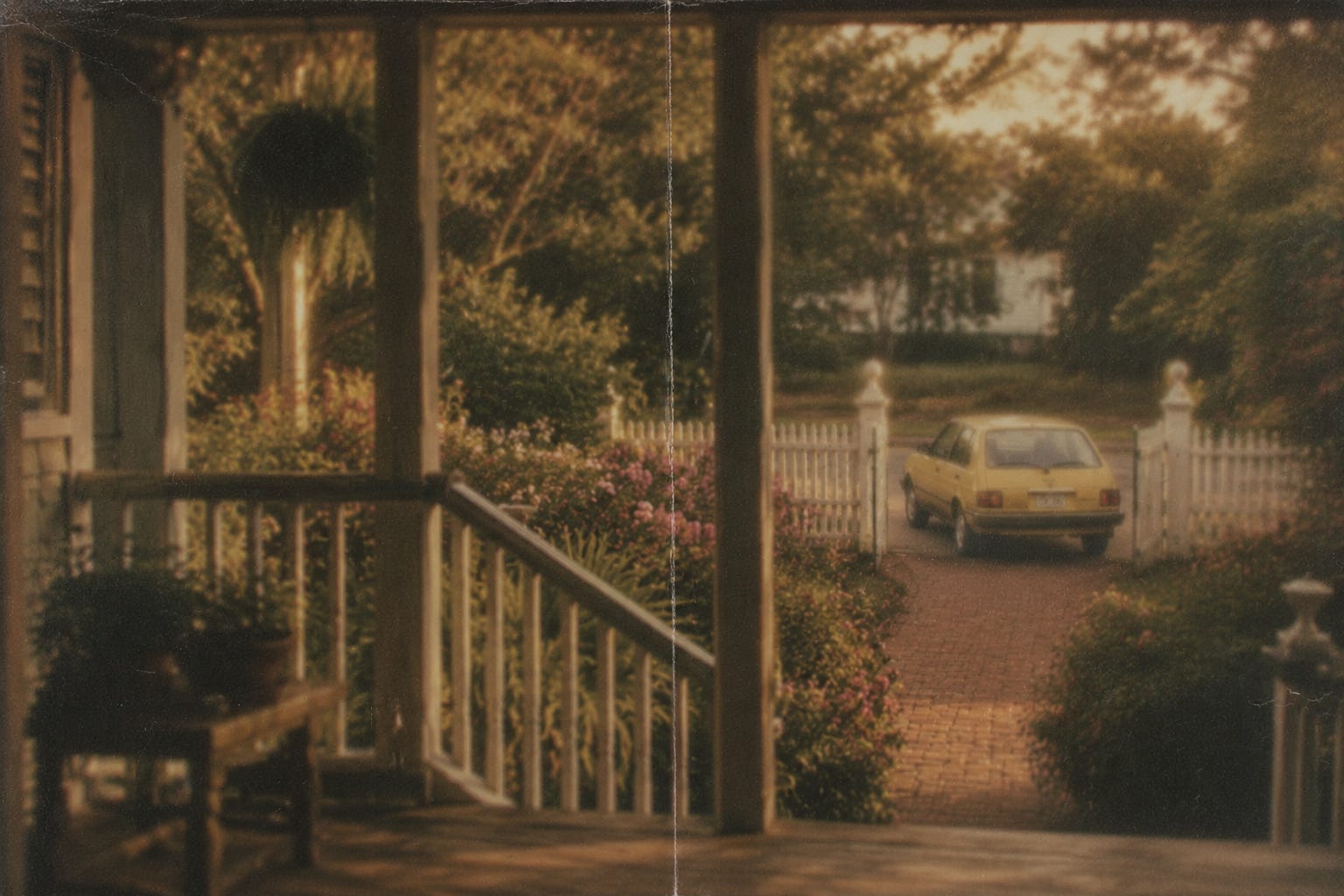
Jeremy came back the next day and he looked about nine years old. We were out on the front verandah when he pulled up. He came up the steps slowly, watching our faces the whole way, doing the thing children do without ever being taught, reading the weather before they walk into it.
‘Hey babe,’ I said, and I smiled at him, trying to send the only message I was still allowed to send. It’s alright. I’m glad you’re home. I wanted to go down those steps and put my arms around him. I wanted to tell him none of this was as big as it had been made to feel. Caleb stood at the top of the steps and didn’t move, and he is a big man, and he let every bit of that show.
‘I’m sorry,’ Jeremy said.
He said he’d help out more. His voice was small, and any parent with a working heart would have heard what that smallness meant, and one of us did.
But Caleb wanted more. More apology, more promises, more submission, standing over a heartsore teenager and negotiating terms like a landlord with a tenant in arrears.
‘It’s okay, Jeremy,’ I said. ‘We can figure this out.’
‘It’s not okay, Eva.’ He didn’t look at me. ‘I need to know things are going to change while he’s living under our roof.’
Under our roof. He’d said it twice now, in both rooms it mattered, and it was always ours, never his. I could hear the whole shape of what he was saying in that one word. The house reclassified as property with conditions of entry. My son standing on the front steps of the only home he’d ever had, waiting to be told whether he still qualified. A home is meant to be the one place a person isn’t asked to earn their spot. That’s the entire offer. It’s the thing that separates a family from a share house. And we took it off the table over a dishwasher.
I went silent. I was angry and confused and I had no idea how to play it, and I knew with total certainty that anything further I said would be stamped out where it stood. I think Jeremy knew it too.
And then something switched in his eyes. I watched it happen. He looked up at his father’s face and his father’s size and whatever he found there finished the conversation for him. He turned, and went back down the steps, and got in his car, and drove off, and he was gone.
I’m proud of him for it. That’s an odd thing to be able to write about the worst day of my life, and it took me a long time to understand why it’s true. My son did in about eight seconds what I couldn’t manage for a long time afterwards. He stood in front of that face, took its measure, and refused to bargain. He still had the one thing I’d already handed away. He still knew what he was worth.
After the car was gone I told Caleb I needed a shower.
It says something about the house by then, that this was the tool I reached for. I needed a room I was allowed to be alone in and a noise loud enough to cover me, and a shower gives you both without owing anyone a reason. Nobody questions a shower.
Door shut, water on, and it came up out of me all at once. I went down the tiles the way women go down tiles in films, folding, until I was sitting on the floor with the water running over my head, and I howled. It wasn’t crying. It was the sound a body makes when the grief is bigger than the room. The water took all of it. Nobody heard a thing.
And I wasn’t down there because he was wrong and I was right. It was worse than that, and less flattering to me. Jeremy wasn’t pulling his weight. That was true, it had been true for months, and I didn’t have an answer for it either. I’d been trying for the best part of a year and I couldn’t reach him. I didn’t know what he needed. I didn’t know what would have worked. I knew only one thing, sitting on those tiles with total certainty and no power at all to act on it: that the answer was not this. Whatever it was, it was not my boy asleep in a car park with the seat pushed back.
Caleb was out in the shed with a project. He wasn’t avoiding me. To him this was a teenager being taught a lesson, not a catastrophe, and he’d gone back to his evening the way you would after any minor domestic weather. And I already knew, without having to think about it, that he could not be allowed to see the state I was in. A grief this size would land on him as an accusation. He’d feel got at, then he’d get angry, and somehow within the hour I’d be the one apologising. So I kept it for the shower. That was how it worked by then, though nobody had ever said so out loud: his feelings set the temperature of the house, and mine went where the water could take them.
I got out. I dried my hair, put my clothes back on, and made dinner for the two children who were still living under our roof, because the phrase belonged to me now too. I’d let it into the house, and it wasn’t leaving.
He found a room in a share house where I’m pretty sure the housemates did drugs. Then another place like it, and another, rooms in the houses of people who were messy and checked out and barely spoke to him, still seeing his girlfriend, still carrying what he was carrying. I visited a few times a week. I’d bring him a meal in a container and sit on the end of his bed in whatever room he was in, and we’d talk, and I’d take him out for a coffee, and I stayed close in the only ways left to me, which were small and practical and nowhere near enough. And over those months I watched him travel steadily further out of reach. A new girlfriend eventually. A new scene. A big tattoo climbing up his neck. A whole world of altars and animal bones and heavy music, as far from our kitchen as he could get without leaving town. What came back to me instead, in instalments, one visit at a time, was the understanding that I’d lost something that doesn’t grow back on its own: the part of a child that believes, without ever once checking, that his mother will put herself between him and the world.
He knew now that I wouldn’t. He’d watched me not.
Even writing that sentence, I have to stop. There are parts of this story I can walk straight into, rooms I can describe down to the last detail. This is not one of them. When I go near it the sadness is so deep I can’t stay in it, and I don’t want to feel the whole of that heartbreak at once. I’m not sure a person is built to. It is the worst thing I have ever done. Or the worst thing I didn’t do, which I’ve since learned is the same thing when you’re the only other adult in the room. Of everything in this book, the strangers and the counters and the letters, this is the one that sits in the middle of me like a stone, and I suspect it always will. I feel responsible because I was. So I’ll do here what I couldn’t do then, and not look away, but I’ll do it briefly, because some debts aren’t paid by writing them down. They’re paid over years, in coffees and dropped-off meals and slowly re-earned trust, and I’m still paying, gladly.
It took a long time, and distance, and his forgiveness, which he has given me, my gentle boy, more freely than I have ever given it to myself, before I understood those two days properly. We talked it through, much later, and he said something that rearranged the whole memory. He said he’d known I couldn’t speak. He said he’d been frightened of Dad too.
Too. That one word did more work than any therapist. Because I hadn’t known I was frightened of Caleb. I’d have argued with you if you’d said it to my face. But my son had watched the glare land, watched my sentences die in the air, and understood at eighteen what I couldn’t admit to myself at forty-something: that the two of us were running the same calculation in that kitchen. Keep still. Keep quiet. Don’t draw it towards you. He’d been running it far longer than one bad night, I think, bracing every time the front door went, waiting to see which version of his father had come home. He saw my fear before I did. He slept in his car partly because of it. And he forgave me anyway.
That is the cost. It was never the strangers or the hotel rooms; those I mostly paid for on my own. The cost was my son learning, in his own home, over the worst two days of his young life, that his mother’s voice could be switched off by his father’s face. I had said yes so many times in rooms where everything in me was saying no that my no had gone soft from lack of use, and when it finally counted I spent it three times, in a kitchen and a corridor and on a front verandah, and not one of those times moved a single thing. He stood there and watched all three of them fail. That is what my boy learned in his own house. I’ve carried it every day since, and I’ll carry it for as long as I carry anything at all.
And a fortnight after Jeremy drove off that second time, before a single one of those coffees, before the forgiveness, before I understood a word of what I’ve just told you, we packed our bags for a festival on the island. My son was asleep in a stranger’s spare room on the other side of town.
We went anyway.
It's interesting to read different perspectives on the same post. For me, it comes to mind that my mother kicked me out my senior year of high school due to her own emotional immaturity. I was on the honor roll, worked full time, my room was clean... She was jealous of the relationship I had with my boyfriend, would be first husband's family. This actually came up last week during some emotion work I'm doing with someone-abandonment age 18. I seriously didn't think it bothered me. I had moved into a safe home with a friend and she offered for me to move back a few weeks later. I declined.
Now let me state the difference for your situation. You repaired the relationship. We all make mistakes and yeah some are big. Working with a child on responsibility vs needing to be in control and punishing. My mother will never have the capacity that I wish and that's a grief I have continue to work through. Your son is blessed to have you.
As always, I look forward to your posts. It's not just your writing ability. It's the growth and vulnerability you show to us and what we gain in ourselves by your sharing. 🫶
This one really annoyed me. Sorry. It just fucked me off. I was a lot younger than your son when I broke down like he did — and of course I don’t know the details but whatever else was going on he was depressed. And I can tell you this with almost absolute certainty you couldn’t have done anything for your son at this time. In fact by the sounds of what I’m hearing you actually keep him safer by not doing what you feel you should have done. That sounds counterintuitive but Caleb was a bully. And clearly a had seriously fragile ego. I can’t work out what he was. There’s narcissism, there is pyschopath, sociopath, vulnerability but nothing really fits. I’d guess the answer lies in his own childhood and maybe even relationship with his dad, You say you carry it and always will and I understand that but the story that I’m hearing you were actually keeping him afloat. I needed a father and boys do need a Dad. I don’t care what people say. And Caleb was not only failing to be a father, he then rejected him and mocked him. A lot of his behaviour and changes as you described that’s also possibly a cry for help. Most boys will look up to their male role models. Usually dads and rejection is the worst. I am waffling along but the reality is when you say your son was drowning - he would have drowned no matter what. You can’t save a person fully anyway and with the type of dynamics you had it looks to me like if you had of “undermined” (that’s so no the right word) Caleb it would have got so explosive ir would have made things far worse for you son. To me. It sounds like you protected the situation and everyone in it. I could blame my mum for so much and trust me I was half the age your son was when and she’s gone missing - but she had to do what she had to do. Her priorities were to keep her family in a house, with food, clothes, warmth. So there is blame to go around, although no one in my family accepts any because they are… doesn’t matter…. But anyway. You did what was right at the time. I’m still baffling on with my drivel 🥲🥲🙃🫠🥹